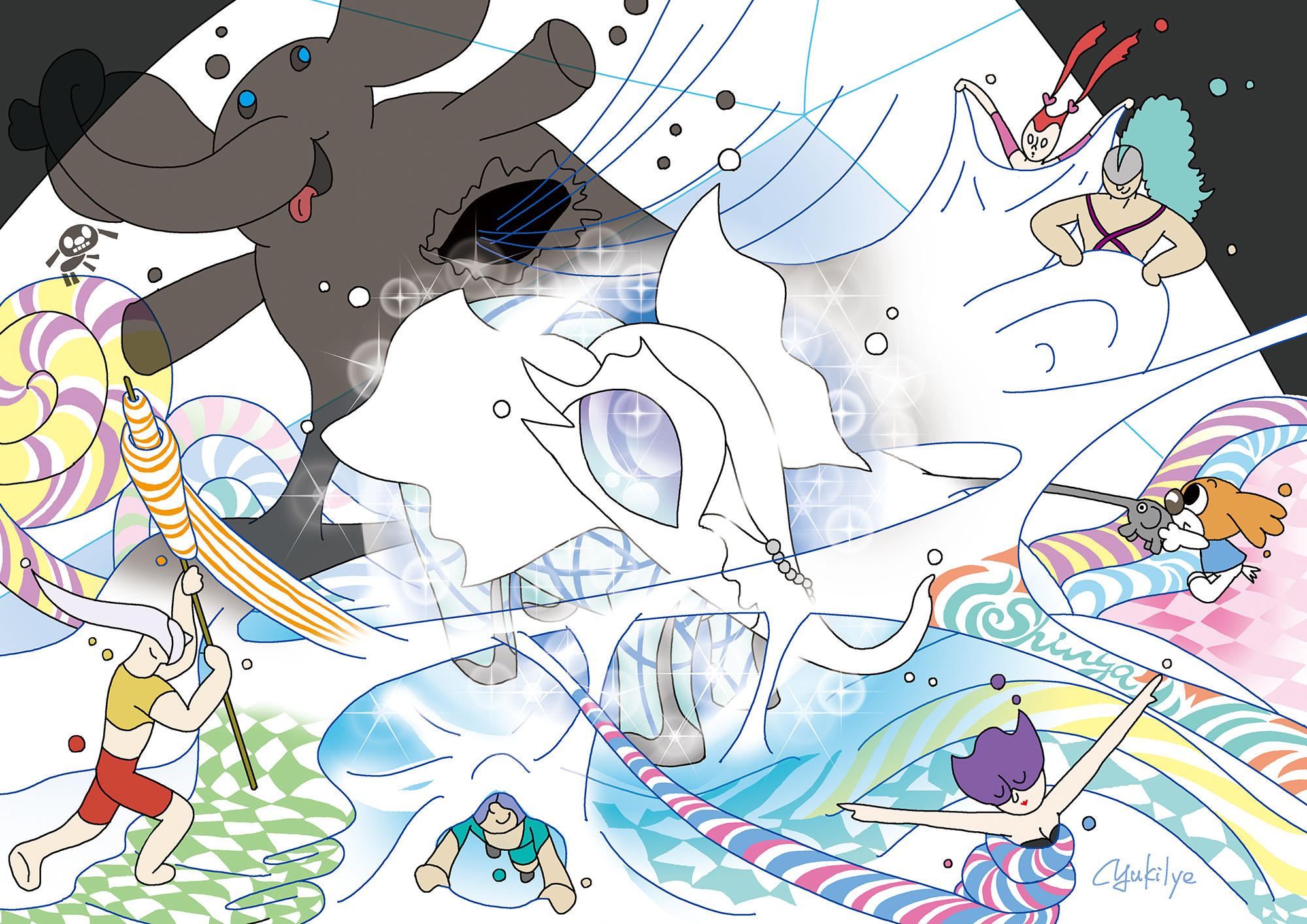
サーカスの舞台に、黒いゴム人形の象が現れます。
団員たちはそれを押し、引き、支えながら、まるでショーの一部のように、その象を取り囲んでいます。
やがて、張りつめていた黒い象は、音を立ててはじけ、その内側から、まばゆい白い象が姿を現します。
真っ白な体は光をまとい、大きな瞳は、まるでクリスタルでできているかのように輝いています。
鼻や脚には、銀細工のアクセサリーが飾られ、新しい存在としての誕生を静かに告げています。
その瞬間を祝うように、サーカスの団員たちは踊り、演じ、美しく華やかな動きで、この変化を支えます。
壊すためではなく、生まれ変わるための過程として。
この絵が描いているのは、古い自分が砕け、その奥から、まったく新しい自分が歩き出す瞬間。
それは痛みではなく、祝福とともに訪れる変化です。
影がはじけたあと、光は、静かに、確かに、歩き始めます。
The Shadow Bursts, and the Light Begins to Walk
On a circus stage, a black rubber elephant appears.
The performers push, pull, and support it,surrounding the figure as part of an elaborate show.
At last, the tightly stretched black elephant bursts open, and from within emerges a radiant white elephant.
Its pure white body glows with light, and its large eyes shine as if they were made of crystal.
Silver ornaments adorn its trunk and legs, quietly announcing the birth of a new being.
As if celebrating this moment of transformation, the circus performers dance and perform around it, supporting the process with beauty and grace.
Not to destroy, but to honor the act of becoming something new.
This piece depicts the moment when the old self breaks apart and an entirely new self steps forward from within.
It is not a scene of pain, but one of change embraced and celebrated.
After the shadow bursts, the light begins to walk—calmly, surely, and on its own path.